Incision Decision
Overview
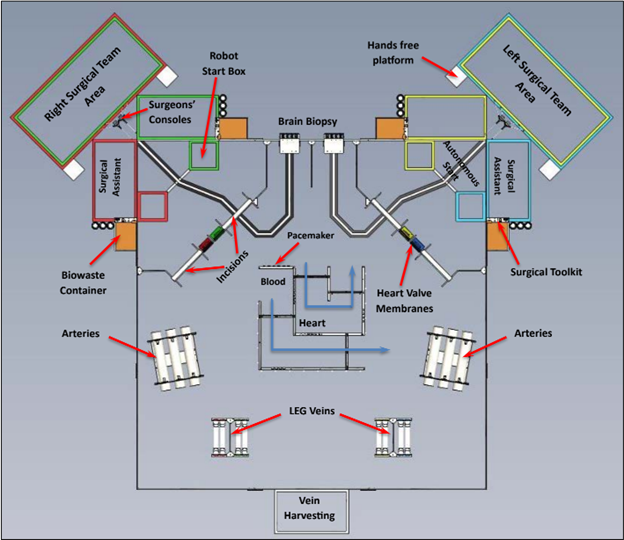
In BEST Incision Decision, robots work to perform minimally invasive surgeries inside a simulated human body (SimBody) containing simulations of various vital organs. For this challenge, robots must perform 10 surgical procedures, located within a simulated brain, heart, and major blood vessels. Robots start near the SimBody’s shoulders and enter the body through small incisions.
Surgeon & Surgical Assistant
- The Surgeon pilots the robot, while the Surgical Assistant sets up the robot for its autonomous routine and loads surgical instruments from the toolkit.
Surgeon's Console & Camera
- A camera is attached to the robot and used by the surgeon to operate in parts of the body with limited visibility.
Biowaste Container
- The Biowaste container is located next to the Surgical Assistant's Area. Damaged body tissue must be disposed of here after removal from the SimBody.
Surgical Toolkit
Contains all surgical instruments and supplies available for the robot to use during a match.
Biopsy Needle
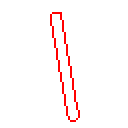
- Used to complete the Brain Biopsy procedure.
Ablation Wheel
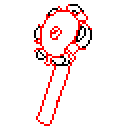
- Used to complete the Cardiac Ablation procedure.
Valve Clamp
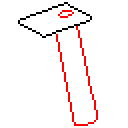
- Used to complete the Faulty Valve Disposal and Artificial Valve Installation procedures.
Plaque Rake
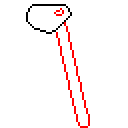
- Used to complete the Artery Plaque Removal procedure.
Team-Built Instrument
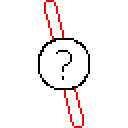
- A custom instrument built by the team, can be used to replace one of the provided instruments.

Brain Biopsy

The SimBody brain has two (2) biopsy locations for robots to collect tissue samples. These samples can then be examined by doctors to identify diseases or abnormalities in the brain. The biopsy must be performed autonomously without control from the surgeon. An imaging isotope has been injected into the SimBody from each shoulder incision to provide a path for robots to follow.
- 200 points per sample, up to 400 points for 2 samples
- 50 bonus points per sample collected by partner, up to 100 points for 2 samples
Faulty Heart Valve(s) Disposal
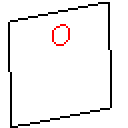
The SimBody heart has four (4) heart valves, each one containing a faulty valve membrane. These valves have become damaged and allow blood to flow in the wrong direction, back into the heart. In order to prevent heart failure, robots must remove these faulty valves and replace them with artificial ones.
- 30 points per valve disposed in the Biowaste container
- Max 120 points for 4 valves
Artificial Heart Valve(s) Installation
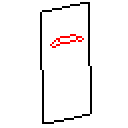
Each robot gets four (4) artificial heart valve membranes, available from the robot’s starting position outside the shoulder. Robots must insert these artificial membranes into heart valves to allow blood to flow correctly throughout the body.
- 125 points per valve membrane placed in ventricle (valve swinging out of the heart)
- 150 points per valve membrane placed in atrium (valve swinging into the heart)
- Max 600 points for 4 membranes
Pacemaker Electrodes Connection
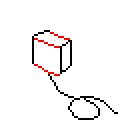
There are six (6) pacemaker electrodes available on the field for all robots to use. These pacemakers help the heart maintain a steady heart rate when it is unable to do so on its own. Robots must connect these electrodes to color-coded receiver pads located inside the SimBody heart.
- 22 points per electrode connected
- Max 132 points for 6 electrodes
Cardiac Ablation
There are six (6) ablation locations on the outer walls of the SimBody heart. Ablation is used to destroy unhealthy heart tissue that can cause arrhythmias (abnormal heart rhythms). Robots must use a surgical instrument known as the ablation wheel to remove the affected heart tissue. Each ablation wheel has six (6) tags used for ablation. These tags can all be attached to the same location, or to different locations.
- 10 points per ablation tag attached on visible side
- 30 points per tag attached on blind side
- Max 180 points for 6 tags
Vein Harvesting
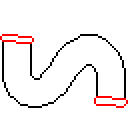
The robot can harvest Lower Extremity Group (LEG) veins from the SimBody to use in coronary artery bypass procedures. Each robot has two (2) color-coded veins available to harvest.
- 70 points per vein stored in Vein Harvesting Storage Area
- Max 140 points for 2 veins stored
Coronary Artery Bypass
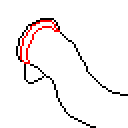
Harvested LEG veins can be grafted to the SimBody heart to increase blood flow and improve circulation throughout the body. Coronary artery bypass is used when blood flow through the heart is limited due to blocked or narrowed arteries. The robot must connect harvested veins to six (6) specific bypass locations on the SimBody heart.
- 150 points for each end of a vein connected on visible side
- 225 points for each end connected on blind side
- Max 900 points for 2 veins (all 4 ends connected)
Artery Plaque Removal & Disposal
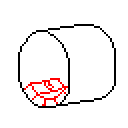
There are six (6) arteries in the SimBody, with four (4) plaque bricks clogging each end of each artery. Robots must remove this plaque to open up the arteries and allow for sufficient blood flow.
- 10 points per plaque brick removed from visible side, 20 points if disposed in Biowaste container
- 15 points per plaque brick removed from blind side, 30 points if disposed in Biowaste container
- Max 960 points total (480 points from visible side, 480 points from blind side)
Angioplasty (Stent Insertion)
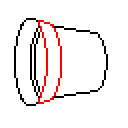
Angioplasty is a procedure which uses stents to widen narrowed or clogged arteries and increase blood flow throughout the body. Each team has three (3) color-coded stents available to place inside arteries.
- Visible side:
- 25 points per stent inserted into lower artery
- 35 points per stent inserted into upper artery
- Blind side:
- 40 points per stent inserted into lower artery
- 53 points per stent inserted into upper artery
- Max 120 points total
Internal Hemorrhage Damage Control
During the surgical procedure, internal hemorrhaging (bleeding) may occur inside the SimBody. The bleeding has stopped, but robots must clean up the blood droplets that have escaped into the body. There are 18 blood droplets inside the SimBody.
- 3 points per blood droplet removed from body and placed outside shoulder incision, 5 points if disposed inside Biowaste container
- Max 90 points for 18 droplets
 Jigsaw Surgical Solutions